

Kallithea, July 20th 2026
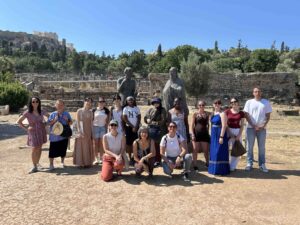
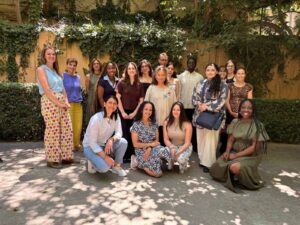
The international summer program “Food and Mediterranean Culture” was completed with great success. It was organized as part of the collaboration between the Master’s Program (MS) “Applied Dietetics – Nutrition” at Harokopio University and the Rutgers School of Public Health (Rutgers University, New Jersey, USA). The program took place from June 22 to July 3, 2026 hosted by Harokopio University, offering participants a unique academic and experiential opportunity.
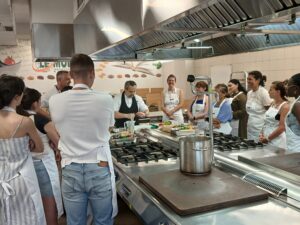
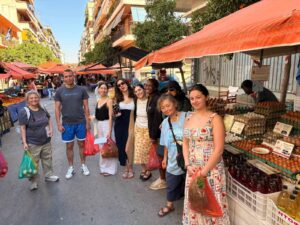
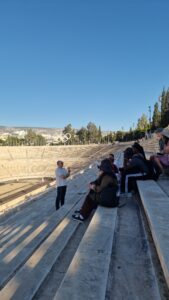
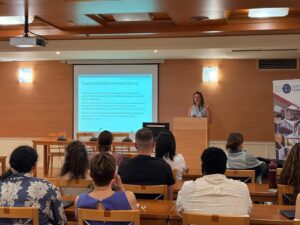
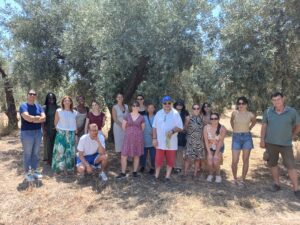
The program aimed to provide an in-depth understanding of the Mediterranean Diet as a sustainable dietary model, as well as a model of cultural heritage, and, as explained by the Director of the Master’s Program, Professor Meropi Kontogianni, it was structured around three pillars: theoretical lectures that strengthened the participants’ scientific foundation, hands-on workshops that helped participants become familiar with sourcing raw materials and preparing Mediterranean meals, and visits to organizations and businesses that set the standard for quality and innovation in the Greek agri-food sector. Through the program, students had the opportunity to gain firsthand experience with the production of iconic Greek products, to discuss with scientists and industry professionals, and to combine theoretical knowledge with practice through the lens of public health, sustainability, cultural identity, and modern food systems.
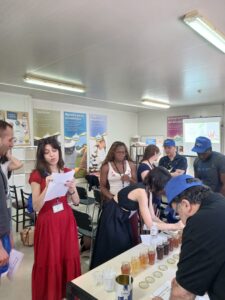
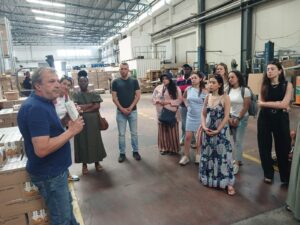
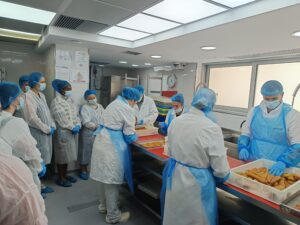
The collaboration between Harokopio University and Rutgers University reaffirms the two institutions’ ongoing commitment to promoting internationalization, academic excellence, and intercultural exchange of knowledge. At the same time, it highlights the pivotal role of the Mediterranean Diet as a model of health, sustainability, and culture with global impact.
Warm thanks to the organizing committee and the administrative support staff, to all members of the teaching faculty at Harokopio University, and of other universities that participated in the program with scientific lectures, to the Amfissa Environmental Education Center for its scientific support, to LE MONDE Educational Group for the seminar on “Mediterranean Culinary Tradition”, as well as to the companies Loulis Food Ingredients, Trikalinos EE, ATTICA BEEKEEPING COMPANY – ALEXANDROS PITTAS S.A., the Union of Agricultural Cooperatives of Argolida (E.A.S.A.), and ANOLIVE for their impeccable hospitality at their facilities.
“ Food and Mediterranean Culture “